
Why TikTok Shop Broke Every Product Photography Playbook You Know
Sellers who win on Amazon rank because a shopper typed a query and a polished product photo answered it. The image does its job in the second between search and click. That relationship — deliberate search, compliant photo, purchase — is the foundation almost every product photography guide on the internet is built on.
TikTok Shop doesn't work that way. Nobody searches.
Your product shows up because the For You Page algorithm decided, in the first three seconds of a video it's showing to a stranger, that this stranger is the kind of person who might watch the next twelve seconds. If the watch-time signal holds, the algorithm pushes the video wider. Somewhere in those fifteen seconds a cart icon appears and 2–4% of watchers tap it. That is the entire funnel.
This changes what a "product image" even means. On TikTok Shop, you are not producing photos for a listing page — you are producing visual hooks for an algorithmic slot machine. The static product card on the Shop tab matters, but it matters after the video has already earned the attention. Sellers who show up with Amazon-grade white-background stills and no video assets will rank for nothing, be shown to nobody, and conclude the platform is broken.
The platform is not broken. The playbook is.
The scale of this shift is the reason this guide exists. TikTok Shop crossed $33B in GMV in 2024 and is projected past $50B for 2025, with 2026 expansion focused on Mexico, Brazil, Japan, and deepening US penetration. Unlike Amazon's winner-takes-all long tail, TikTok Shop's algorithmic surface area means a first-time seller with the right fifteen-second hook can out-earn a shop that's been listing for three years. That's both the opportunity and the trap: the asset-quality ceiling is higher, and the asset-quantity requirement is brutal.
Here is the core shift to internalize before we go further:
| Amazon / Shopify / Etsy | TikTok Shop |
|---|---|
| 6–8 images per listing | 9 showcase images + short-video assets + LIVE backdrops + affiliate cuts |
| Static, searchable, evergreen | Video-first, ephemeral, trend-dependent |
| Winner is "best for the query" | Winner is "most watchable in this 3-second window" |
| Refresh quarterly | Refresh weekly, sometimes daily |
| One photographer can cover a catalog | One photographer cannot keep up — this is why AI matters here specifically |
This guide covers specs first (you need to know the container before you fill it), then the 7-asset formula for every TikTok Shop product, then the FYP psychology that makes a video stop thumbs, then the AI workflow we've built for sellers who can't put a creator on retainer.
If you've never shot a product photo at all, the Product Photography for Beginners (2026) primer covers the lighting and framing fundamentals you'll still need before any TikTok-specific tactics can work.
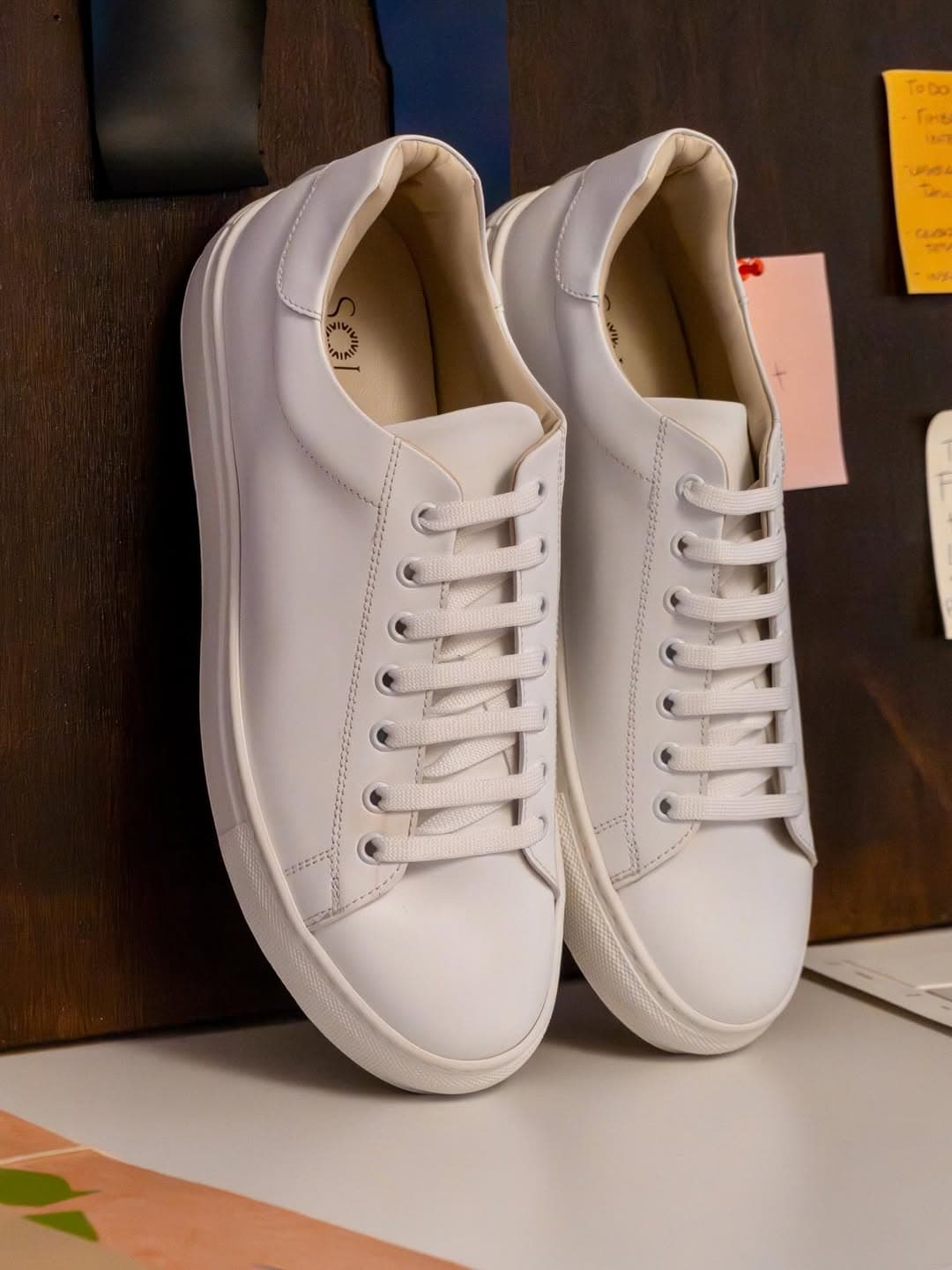 BEFORE
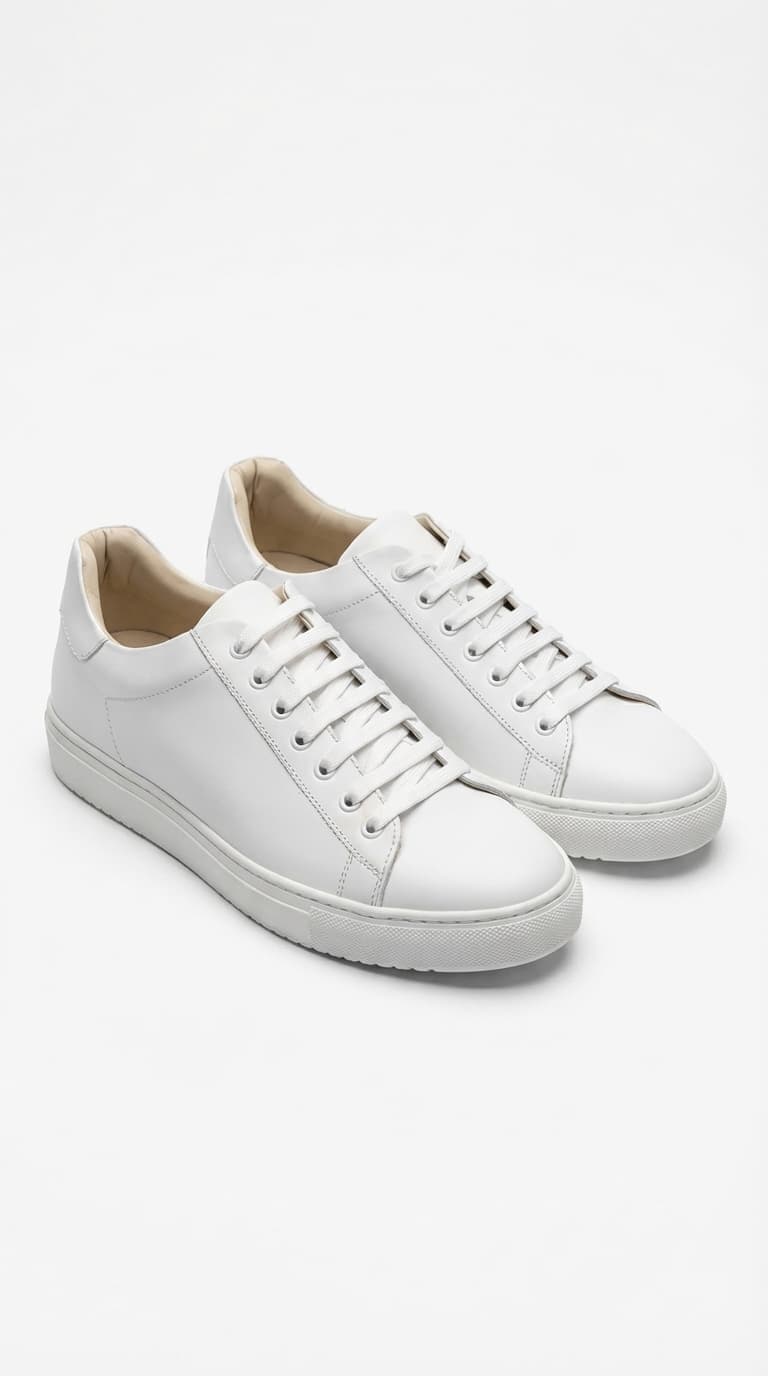 AFTER
AFTERThe 2026 TikTok Shop Visual Asset Spec Table
Before we get philosophical about hooks and algorithms, the boring table. TikTok Shop has distinct asset slots, each with its own aspect ratio and duration rules, and getting any of them wrong means your listing falls back to a cropped, stretched, or rejected default.
Important caveat: TikTok Shop updates its spec rules more aggressively than any other marketplace we cover. Always cross-reference the Seller Center Help Center before shooting. The numbers below reflect the 2026 ruleset at time of writing.
Product showcase images (the Shop tab card and PDP)
| Field | Spec |
|---|---|
| Number of images | Up to 9 per listing; minimum 5 to qualify for the "Good" listing-quality tier |
| Main image aspect ratio | 1:1 (square) — mandatory |
| Main image minimum resolution | 600 × 600 px (1200 × 1200 px or larger strongly recommended) |
| Maximum resolution | 20000 × 20000 px |
| File formats | JPG and PNG only (HEIC and WEBP uploads are auto-converted to JPG) |
| Max file size | 5 MB per image |
| Background | Clean white for the main image; lifestyle permitted for additional images |
| Prohibited elements on main image | Watermarks, borders, promotional text, logos, graphics, multiple product variants, digital renderings, duplicated images |
| Blur / fuzz tolerance | Zero — listings with blurry main images fail quality review |
Product video (the asset that actually drives GMV)
| Field | Spec (product detail page video) |
|---|---|
| Aspect ratio | 9:16 (vertical, full-screen) |
| Duration | Up to 10 minutes supported; 15–60 seconds performs best for conversion |
| Minimum resolution | 720 × 1280 px; 1080 × 1920 px strongly recommended |
| Recommended codec | H.264 video + AAC audio |
| File format | MP4, MOV |
| Max file size | 500 MB |
| Frame rate | 30 fps standard; 60 fps permitted |
| Audio | Required for best algorithmic performance — licensed music from TikTok's Commercial Music Library or original audio only |
| Subtitles / captions | Strongly recommended; roughly 85% of first-two-second watches happen with sound off |
Separate path — Product Media Center uploads. TikTok's bulk upload tool for media assets applies tighter constraints: MP4 only, max 10 MB, aspect ratio between 9:16 and 16:9, duration under 60 seconds. Keep these limits in mind if you're uploading via the Media Center rather than attaching video directly to a listing.
LIVE stream background assets
| Field | Spec |
|---|---|
| Aspect ratio | 9:16 |
| Minimum resolution | 1080 × 1920 px |
| Use case | Brand-consistent backdrop for LIVE sessions; category banners |
| Refresh cadence | Monthly minimum; align with your promotional calendar |
Affiliate-friendly asset pack (the asset most sellers forget)
If you're running the TikTok Shop Affiliate Program — and in most categories you should be — creators need a raw asset pack to cut their own videos from. This is not optional if you want affiliate-generated GMV. The pack should include:
| Asset | Spec |
|---|---|
| Product on pure white | 4K, multiple angles, no shadow |
| Product on transparent background | PNG with alpha channel |
| Product in lifestyle context | 4:5 and 9:16 crops, 2–3 environments |
| Product demo loop | 6–10 seconds, no audio, seamless loop, 9:16 |
| Unpackaged close-up | Macro detail, 9:16 |
Creators will cut these into their own voice-overs and hooks. Giving them good raw material is the highest-ROI thing a brand can do for affiliate performance — and it's exactly where Picoko's AI Product Photoshoot and AI Product Video tools earn their keep.
Regional variations worth knowing up front
- US / UK: English captions and voice-over, model ethnicity reflecting target demographic, generally permissive on health and wellness claims but strict on medical language.
- SEA5 (Indonesia, Thailand, Vietnam, Philippines, Malaysia): Local-language captions essential; Indonesia in particular benefits from Halal certification imagery on food and cosmetics; Thailand requires Thai-language captions on any text overlay; the Philippines skews toward family-setting lifestyle shots.
- Mexico: Spanish-language voice-over and captions, Día de los Muertos and Buen Fin promotional imagery, longer tolerance for storytelling videos (up to 45 seconds performs well versus the US 15-second standard).
We'll return to regional nuance further down.
The 7-Asset Formula That Actually Converts on TikTok Shop
Most sellers treat TikTok Shop content like they treat Amazon listings: produce the minimum required assets, publish, leave it alone. This is how accounts die. TikTok Shop rewards saturation with variation — the same product shown twenty different ways in twenty different videos will outperform one "perfect" video every time, because the FYP algorithm tests and retests your product across audience segments.
The 7-asset formula below is the minimum pack every product in your catalog should have before you launch it on TikTok Shop. This is not the full production output — think of it as the raw material from which you or your affiliates will cut a rolling stream of videos.
Asset 1 — The Main Showcase Still (1:1, white background)
The only asset that looks like "traditional" e-commerce photography. This is what appears in the Shop tab card and the product detail page header. Its job is to pass the instant-recognition test: a shopper who already tapped "add to cart" on a video wants visual confirmation they're buying the exact thing they saw. Deviate from the white-background convention only if your product category explicitly rewards it (fashion, beauty, some home goods).
Generate via AI Product Photoshoot, using the methodology documented in the Visual Syntax Framework post.
Asset 2 — The 3-Second Hook Video (9:16, 15 seconds)
The single highest-leverage asset in your entire TikTok Shop operation. Its job is to earn the first three seconds of watch time. The next twelve seconds are follow-through. Without the first three, nothing else matters.
Good three-second hooks fall into a small number of archetypes — problem-agitation ("I hated this about my kitchen until..."), transformation ("Watch what happens when..."), absurdity-reveal ("I bought this because I thought it was going to be useless"), or unboxing-at-speed (ASMR, extreme close-up, tactile sounds). We dissect each archetype in the 3-Second Rule section below.
Generate via AI Product Video — designed for 9:16 output with the pacing profile TikTok Shop's algorithm rewards.
Asset 3 — The Extended Demo Video (9:16, 30–60 seconds)
The follow-up for shoppers who engaged with the hook. Slower, more detailed, shows the product in use. This is the asset that converts consideration into cart. Where Asset 2 is emotional, Asset 3 is rational: feature walkthrough, use-case variety, scale reference shown through a human hand or a common household object.
Asset 4 — The Lifestyle Integration Shot (4:5 and 9:16)
A human actually using your product in the environment where it belongs. This is where TikTok Shop assets diverge hardest from Amazon ones. Amazon buyers tolerate — even prefer — product-only images. TikTok Shop viewers need an implicit answer to "is this for someone like me?" in the first frame, and the fastest way to deliver that answer is a human in frame.
Shoot once, crop twice: 4:5 for the Shop tab showcase slot, 9:16 for video backgrounds and affiliate use. Generate via AI Model Photoshoot — the same tool used by the fashion brands in our case study to replace per-shoot model fees.
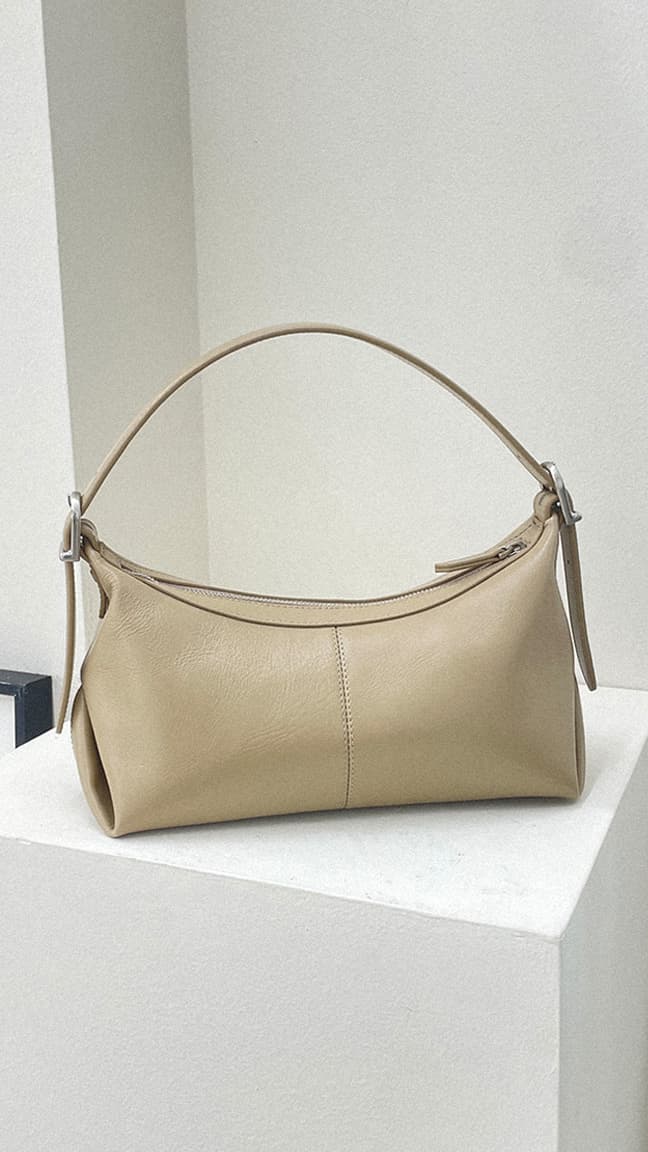 BEFORE
 AFTER
AFTERAsset 5 — The Scale & Detail Close-Up (9:16)
"How big is it really?" is the single most common comment on TikTok Shop product videos. Your scale asset answers it before anyone asks. A human hand holding the product beats any written dimension; a common reference object (coin, pen, smartphone) works as a fallback.
Macro detail footage, under ten seconds, no audio needed — these slot into affiliate videos as cutaways and into your own demo videos as B-roll. Critical for jewelry, electronics, kitchenware, and any category where sizing ambiguity kills conversion.
Asset 6 — The Problem/Solution Before-After (9:16)
Not every category has a problem-solution arc, but when it does, this is the highest-converting asset you can produce. Cleaning products, kitchen organizers, beauty tools, hair care — any category where the product visibly changes state deserves this asset.
Compliance caution: before/after imagery for body transformation (weight loss, skin conditions) is aggressively moderated on TikTok Shop and can suspend your account, not just the video. Keep before/after scoped to objects and surfaces, not bodies. The Compliance section further down has the full banned-imagery list.
Asset 7 — The Unboxing / Packaging / Trust Signal (9:16, 10–15s)
The most under-rated asset in the 7-pack. TikTok Shop shoppers — especially in the US and Mexico where the platform is newer — carry a background anxiety that the seller is a dropshipping operation sending a different product than advertised. An unboxing or packaging close-up dissolves that anxiety in ten seconds.
Bonus: unboxing videos perform disproportionately well with the algorithm because they naturally deliver the "reveal" payoff that high-retention TikTok content relies on.
The 3-Second Rule: What Makes a TikTok Shop Video Thumb-Stoppable
The FYP algorithm's most aggressively-weighted signal is three-second retention — the percentage of viewers who watch past the three-second mark instead of swiping. This matters because TikTok's recommendation system is a brutal funnel: your video is first shown to a tiny seed audience of roughly 300–500 people. If three-second retention is above the dynamic category threshold, distribution expands. If not, it dies within an hour.
Product videos specifically struggle with this threshold because the default producer instinct — open on a beauty shot of the product — is exactly what trained TikTok users have been conditioned to skip. "Product on white background with slow pan" is indistinguishable from ten thousand sponsored ads a viewer has already swiped past. The brain tags it as advertising before the conscious mind engages.
Four hook archetypes consistently beat the three-second threshold:
1. Problem-Agitation Opens. Lead with the pain point, not the product. "The reason your kitchen drawer is chaos is not more organizers — it's this." The viewer recognizes their own frustration in 1.5 seconds and stays to see the claim paid off.
2. Transformation Teases. Show the end-state first, reveal the product second. Messy counter → clean counter → "Wait, what did that?" Reverse-chronological storytelling works because it frontloads the dopamine hit and makes the product reveal the resolution.
3. Absurdity Reveals. "I bought this because I was 100% convinced it was going to be useless." Skepticism as a hook earns parasocial trust — the viewer feels like they're being let in on a secret rather than sold to.
4. ASMR / Tactile Opens. Visual-plus-audio sensory overload in the first second. Unboxing tape pull, wrapping paper crinkle, liquid pour, fabric rustle. These bypass the "is this an ad?" cognitive filter entirely because the brain routes sensory stimulus through a different pathway than narrative skepticism.
What consistently fails the three-second test, and what to stop producing:
- Logo-first opens. "Brand X presents..." Dead in 0.5 seconds.
- Studio-perfect product pans on clean backgrounds. Reads as a commercial; viewers have been trained to swipe.
- Static product shot with text overlay. No motion equals no retention signal.
- Voice-over opens with "Hey guys..." The TikTok audience has trained itself to swipe on the word hey.
- Generic stock music instead of product-native audio. Unboxing sounds, ambient kitchen noise, and product interaction audio consistently outperform library tracks.
If you want a deeper framework for briefing a prompt that produces hook-grade footage, the principles in our Visual Syntax Framework post port directly into AI Product Video — the hook archetype becomes the opening-scene directive, the product is the subject, and the environment is the motion-supplying context.
Regional Differences: US vs UK vs SEA5 vs Mexico
One of the fastest ways to fail on TikTok Shop is to copy-paste a US-targeted video into a SEA market. TikTok Shop is not one platform; it's six or seven overlapping regional platforms with shared infrastructure and very different viewer expectations.
United States. Most saturated market, highest competition per keyword and category. English voice-over, captions strongly recommended (85% of first-two-second watches are sound-off). Model ethnicity should reflect target demographic — the FYP tends to amplify content that matches the viewer's visible demographic profile. Compliance moderation is strictest on medical and health claims. Peak GMV windows: Super Bowl adjacent, mid-summer "Prime Day" parallels, Q4 holiday.
United Kingdom. Smaller but more mature than US TikTok Shop. English-language, with British spelling and idioms ("trousers" not "pants"). Lower tolerance for overtly promotional tone — UK TikTok users pattern-match "American ad style" as a reason to swipe. Bank Holiday calendars drive promotional windows.
SEA5 — Indonesia, Thailand, Vietnam, Philippines, Malaysia. Five distinct markets, not one. Non-negotiables per country:
- Indonesia: Bahasa Indonesia captions and voice-over. Halal certification imagery (MUI logo) is effectively required for food, cosmetics, and personal care categories — even where not legally mandated, its absence lowers conversion noticeably.
- Thailand: Thai-language captions on every text overlay. Thai viewers skip English-captioned videos at very high rates even if the product is globally recognized.
- Vietnam: Local-language voice-over, family-setting lifestyle shots overperform, and cash-on-delivery familiarity cues (showing package arrival at a home) build trust.
- Philippines: Tagalog or English-Tagalog codeswitch ("Taglish") reads as authentic; pure English reads as corporate.
- Malaysia: Bahasa Melayu for mass market, English for premium positioning. Malaysian TikTok tolerates longer videos (up to 45 seconds) better than Singapore or Thailand.
Key SEA5 dates: 9.9, 10.10, 11.11, 12.12 (shopping festivals adapted from the broader SEA e-commerce calendar), Ramadan + Eid al-Fitr (especially for Indonesia and Malaysia), and Songkran (Thailand, April).
Mexico. Fastest-growing TikTok Shop market as of 2026. Spanish-language voice-over is non-negotiable. Longer storytelling videos (30–45 seconds) outperform the US 15-second standard — Mexican TikTok users consume longer-form content per session. Key dates: Buen Fin (mid-November, Black Friday equivalent), Día de los Muertos visual vocabulary for Q4, and Three Kings Day (January 6) for post-holiday sell-through.
The practical takeaway: never repurpose a US hero asset as the main video for a non-US market without re-dubbing, re-captioning, and ideally re-shooting the model frame. Use Picoko's tooling to regenerate the model shot with a regionally-appropriate face — a single source product image can produce US, UK, SEA, and MX lifestyle variants in under an hour.
AI Workflow: From One Product Shot to a Full TikTok Shop Asset Pack
If you've read the spec table and the 7-asset formula and your reaction is "this is a full-time job for one product, and I have fifty", you are having the correct reaction. The asset volume TikTok Shop demands is the reason most SMB sellers either give up or content-starve the platform.
The AI workflow below compresses what was historically two to three weeks of production per product into roughly a day.
Input required: one clean studio-grade photo of your product. Either shot DIY with a phone, window light, and white paper (the $25 DIY setup in our case study works fine), or an existing catalog image you already own.
Step 1 — Generate the 9-image showcase pack. Upload your source photo to AI Product Photoshoot. Use the Visual Syntax Framework to specify nine angle and environment variations: one hero white-background, three contextual lifestyle angles, three detail/macro crops, two scale references. Output: nine stills in 1:1 and 4:5, ready for the Shop tab card.
Step 2 — Generate the lifestyle model integrations. Feed the source product photo into AI Model Photoshoot. Generate four to six variants across different model profiles matching your target demographic and environment contexts (kitchen, bathroom, office, outdoor). Export each in 4:5 and 9:16. These become the raw material for lifestyle-hook videos and the affiliate pack.
Step 3 — Produce the hero video. AI Product Video takes the source image and outputs 9:16 vertical video assets. Generate three to five variants using different hook archetypes — one problem-agitation, one transformation, one ASMR/unboxing. You will publish all of them; TikTok's algorithm will tell you which earned retention.
Step 4 — Build the affiliate asset pack. Run your source photo through Background Remover to produce a transparent PNG. Run a cleanup pass with Magic Eraser if the source has visible reflections or cables. Bundle the transparent PNG plus the best four to five stills from Step 1 into a Google Drive folder for affiliates — the background removal pillar walks through the cleanup workflow in detail.
 BEFORE
 AFTER
AFTERStep 5 — Generate category-specific supplementals. If you sell in categories with strong flat-lay convention (jewelry, beauty, stationery, specialty foods), Flat Lay produces top-down compositions that outperform lifestyle shots in those specific verticals. Otherwise skip this step.
Output from one source image: 9 stills + 4–6 lifestyle shots + 3–5 video variants + transparent-PNG affiliate pack. That is roughly three weeks of TikTok Shop content per product, produced in a single afternoon.
The unlock this gives you is not speed per product — it is asset abundance per product. The FYP algorithm rewards sellers who can saturate with variation. A seller with twenty video variants per SKU outperforms a seller with two variants per SKU even when the individual production quality is lower. Until AI, asset abundance was exclusive to brands with in-house creators. That gate is now open.
Compliance Gotchas
TikTok Shop's content moderation is materially stricter than Amazon's or Shopify's, and its enforcement is automated, fast, and often silent — your listing or entire account can be suppressed without an explicit notification. The categories below consistently trip up sellers new to the platform, and all of them are documented in TikTok Shop's Prohibited Products Policy and Responsible Health-Related Content guidelines (which update regularly; audit quarterly).
Fully prohibited products (no compliant path to sell)
- Weight management products of any kind — diet pills, appetite suppressants, fat burners, detox teas marketed for weight loss, slimming creams, waist trainers sold on weight-loss claims
- Any product using "GLP" in branding, title, or variant name (including creative misspellings)
- Cosmetics containing FDA-prohibited or restricted ingredients, and any product designed to bleach, whiten, or reduce melanin in the skin
- Firearms, ammunition, realistic replicas, vape and nicotine products, CBD/cannabis, prescription-only medicines, unlicensed medicines
- Weighted infant swaddles and blankets, beaded teethers, most supplements marketed for children under 3
- Stolen, counterfeit, or "gray market" goods and anything infringing another party's trademark
Prohibited imagery (will suppress the listing or the account)
- Before-and-after photos of body shape, weight, or musculature — including edited images, filters, or digital effects implying transformation
- Images with arrows, outlines, oversized clothing, or any graphic device pointing to growth or shrinkage of body parts
- Images of real medical symptoms shown in association with a product
- Doctor, nurse, or medical-professional imagery used to imply endorsement or authority
- Real or implied personal testimonials about weight loss, body transformation, or curing a condition
Prohibited claims in captions, voice-over, and on-image text
- Any language implying a product treats, cures, or prevents a medical condition without professional supervision
- Any language implying weight loss, weight gain, fat reduction, muscle gain, or body transformation
- Comparisons to "GLP-1" medications or named prescription drugs
- Time-bound outcome promises ("drop 10 pounds in a week", "burn belly fat instantly", "lose weight without diet")
- Prohibited hashtags that flag content for review, including
#starvemax,#bonesmashing,#droppoundssupplement,#fatburningtea— the list expands regularly
Suppressed-but-not-banned imagery (listings will rank lower)
- Currency close-ups, cash stacks, or visible price claims in frame — TikTok Shop controls promotional pricing through its own mechanisms
- Competitor logos visible in the frame, including on products shown alongside yours
- Third-party editor watermarks (CapCut logo, InShot logo, etc.) — use TikTok's native editor or remove watermarks entirely
- Copyrighted music not sourced from TikTok's licensed Commercial Music Library — the rules for creator organic content and the rules for Seller Shop videos are different, and music that is safe in the former can strike the latter
Category-specific certifications to display in-frame where applicable
- Electronics: FCC (US), CE (EU/UK), or regional equivalent visible on packaging; lithium-battery products require additional hazmat qualification
- Beauty devices (skincare tools, LED masks): category qualification required before listing
- Food and supplements: nutrition label, allergen notices, and for Indonesia/Malaysia: MUI Halal certification
- Children's products: age ratings and regional safety marks
TikTok Shop updates its Prohibited Products Policy and content rules frequently — a half-hour quarterly audit of your asset library against the current guidelines is cheaper than recovering a suspended account. When launching in a new region, read the regional Seller Center separately; policies that are safe in the US can still fail in the UK, and SEA5 markets each layer their own local requirements.
A 7-Day Action Plan for Sellers With 1–50 SKUs
If you're starting from zero on TikTok Shop this week, here is the sequence that gets you to publishable content fastest without cutting corners that matter.
Day 1 — Audit. Pick your top 10 SKUs by existing revenue or highest unit margin. For each, count how many of the 7 formula assets you already have. Most sellers discover they have Asset 1 (main showcase) and partially Asset 4 (lifestyle) but nothing else.
Day 2 — Source photography. For any SKU missing a clean studio-grade source photo, shoot one. Phone camera, white paper as background, window light at midday, three angles per product. You will not use these as final assets — they are the input for the AI workflow.
Days 3–4 — Generate full asset packs. Run every audited SKU through the AI workflow above. Budget one to two hours per SKU for review and selection; the generation itself is fast but curation is where quality gets set.
Day 5 — Hook scripting. For each SKU, write three to five hook variants across the four archetypes from the 3-Second Rule section. Fifteen seconds each. Don't pick a favorite; publish them all.
Day 6 — Pilot launch. Launch three SKUs (not all ten). Full asset pack each. Spread across three categories if possible to reduce algorithmic competition inside your own account.
Day 7 — Measure and sort. Check per-video metrics: three-second retention, full-watch completion, product card CTR from video, add-to-cart rate. Kill the videos below category median; double down on the winners with variant generation in the same hook style.
After day 7, the cycle repeats weekly. Same workflow, new products, continuous variation. The sellers who thrive on TikTok Shop are not the ones who produce perfect assets; they are the ones who sustain the cadence.
Benchmarks and What "Good" Looks Like in 2026
Benchmarks on TikTok Shop are noisier than on Amazon or Shopify because category variance is enormous and the algorithm is constantly being retuned. Treat the numbers below as directional starting points, not targets — then measure your own category after 30 days of consistent publishing and replace these with your actuals.
| Metric | Weak | Solid | Strong |
|---|---|---|---|
| 3-second retention | < 20% | 25–35% | 40%+ |
| 15-second watch | < 5% | 8–12% | 15%+ |
| Product card CTR from video | < 1% | 2–3% | 4%+ |
| Video → add-to-cart rate | < 0.5% | 1–2% | 3%+ |
| Affiliate-generated GMV share | < 20% | 30–45% | 50%+ |
The single highest-leverage benchmark to optimize early is three-second retention, because it is the upstream signal on which every other metric depends. A video with 40% three-second retention earns 10–20× the distribution of one at 15%, which is the difference between 500 views and 50,000 views per post.
For a concrete ROI lens on what this volume of content production costs in practice, the small-ecommerce case study documents the cost structure of running an AI-assisted visual operation at scale — the same cost model applies to a TikTok Shop content cadence, with the caveat that TikTok Shop demands roughly 3–4× the asset volume per SKU compared to a traditional marketplace.
Next Steps
TikTok Shop rewards consistent execution more than exceptional individual assets. The seller who ships the 7-asset pack for twenty products this month beats the seller who perfects one 7-asset pack over three months, every time. That math only works if asset production is compressed to the point where it isn't the bottleneck — which is the entire point of building an AI workflow around the 7-asset formula.
If you've made it to the end of this guide, your next move is one of two things:
- Already have products on TikTok Shop and are content-starved. Start with AI Product Video this week. Run the AI workflow on your top three SKUs. Publish three hook variants per SKU. Measure three-second retention on day seven.
- Planning a TikTok Shop launch. Start with AI Product Photoshoot for the showcase pack, then layer in video. Do not launch the listing until the full 7-asset pack is ready — a half-stocked TikTok Shop listing drops in ranking the moment a fully-stocked competitor enters your category.
Related reading
- The Visual Syntax Framework for AI Product Photography — the prompting methodology underpinning every generation step above
- Create Product Lifestyle Photos Without a Photographer — specifics for the Asset 4 lifestyle integration
- 7 Best Practices for E-commerce Product Photos in 2026 — the foundational principles that still apply across platforms
- AI Virtual Try-On: The Complete Guide — particularly relevant for fashion and accessories categories on TikTok Shop